Showing posts with label SIDS. Show all posts

Monday, January 31, 2011

SIDS awareness & Trade-in event

Babies Sleep Safest - Alone, on their Backs, in their Cribs

Some good videos have been produced to help educate parents about measures that can be taken to reduce the incidence of suffocation and SIDS.  The following was produced in Missouri:

The Michigan program, Tomorrow's Child, has also produced several excellent videos about safe sleep with cultural awareness in mind.  It is important that all of the baby's caregivers understand this concept because now that we know better, we can do better.  Check them out here:


http://www.youtube.com/watch?v=GtvKp8TeaOc  (Spanish with English subtitles)

http://www.youtube.com/watch?v=VFepRLn2lzA (short reminder of safe sleep)

Read about the Great Trade-in event at Toys "R" Us and Babies "R" Us at First Candle or at their site.

From Friday, January 28 through Monday, February 21, Babies“R”Us and Toys“R”Us stores nationwide are holding the “Great Trade-In” event, urging customers to trade-in any used cribs, car seats, bassinets, strollers, travel systems, play yards, high chairs or toddler beds in exchange for a 25% savings on the purchase of any new baby item, in any of these product categories, from select manufacturers.
Best Blogger Tips

Sunday, January 9, 2011

Warning - crib bumper pads

Do not use crib bumpers in cribs, bassinets and other sleep environments!  It is especially important to avoid the fluffy, cushiony (and often very expensive), fancy ones.  These fall in the same category as pillows and fluffy bedding, comforters and toys that can pose a safety threat to a sleeping baby who does not have the muscle and head control to move when breathing is compromised.
What You Need to Know
  • Due to their lack of strength and motor development, infants may suffocate, choke and/or become strangled in a crib bumper.
  • The Illinois Chapter of the American Academy of Pediatrics, Kids in Danger, American SIDS Institute, SIDS of Illinois, and the Canadian Health Department all warn parents not to use crib bumpers.  Read sleep safety tips here:  Kids in Danger
  • The U.S. Consumer Product Safety Commission is re-examining the safety of crib bumpers.

Some crib liners/bumpers are being made that are "breathable" and not "cushiony" - it's too early to say if this will solve the problem.  It looks like it would be safer but not really necessary since crib slats now are placed closer together to prevent baby's head from getting caught.  Here's an example of the alternative:

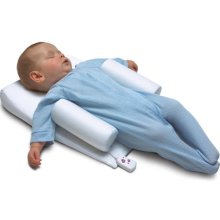
Warning on ALL Sleep Positioners 9/29/2010

Danger: Sleep positioners are NEVER safe to use. Babies may suffocate if they move and their airways become blocked by the sleep positioner.  Remedy: NEVER use a sleep positioner. Best Blogger Tips

Friday, October 8, 2010

A walk to remember - infant loss

Oct. 9 - Layton
Utah Share "Walk to Remember"
- Each year, to commemorate Pregnancy & Infant Loss Awareness month, Utah Share holds the "Walk to Remember". The event gives parents and families a wonderful opportunity to remember and honor their babies. The Walk to Remember is held in memory of all babies who are gone too soon. "We walk in memory of the steps they will never take."

Arrive at 9:30 am to register.
At 10:00 am there will be a brief program, memorial walk, balloon release, and refreshments. You may order T-shirts and Hoodies with the form on our blog: www.utahshare.blogspot.com

We look forward to sharing this special day with you.

Admission: Free
Hours: 9:30 a.m. - 11:30 a.m.
Contact: Marci Nellessen
Phone: 801-544-1159 or 801-499-3663
Email: marci@utahshare.org
Venue: Ed Kenley Amphitheater
Location: 403 North Wasatch Drive , Layton
Web Address: www.utahshare.org
Accessible to those with Disabilities

Best Blogger Tips

Thursday, September 30, 2010

Sleep Positioners - warning!

Infant sleep positioners: Consumer Warning - Risk of Suffocation

[Posted 09/29/2010]

AUDIENCE: Consumers, Pediatrics

ISSUE: FDA and the Consumer Product Safety Commission (CPSC) issued a warning not to use Infant sleep positioners. In the last 13 years, the federal government has received 12 reports of babies known to have died from suffocation associated with their sleep positioners. Most of the babies suffocated after rolling from the side to the stomach.

BACKGROUND: The most common types of sleep positioners feature bolsters attached to each side of a thin mat and wedges to elevate the baby’s head. The sleep positioners are intended to keep a baby in a desired position while sleeping. They are often used with infants under 6 months old.

RECOMMENDATION: Consumers are warned to stop using infant positioning products. Never put pillows, sleep positioners, comforters, or quilts under the baby or in the crib. Always place a baby on his or her back at night and during nap time. See the Consumer Update for links to additional information, including product photos.

Click here for warning with photo.

Best Blogger Tips

Thursday, July 8, 2010

Breastfeeding and SIDS

A German study published in the March issue of Pediatrics found that breastfeeding reduces the risk of sudden infant death syndrome. The study compared 333 infants who died of SIDS with 998 age-matched control infants. At two weeks of age, 83% of the controls were breastfed compared to 50% of the SIDS infants. At one month of age, 72% of the controls were breastfed compared to 40% of the SIDS infants. Exclusive breastfeeding at one month cut the risk of SIDS in half. The study authors’ recommend that public health messages aimed at SIDS risk reduction encourage women to breastfeed through six months of age. Best Blogger Tips

Monday, March 22, 2010

A few studies published in Pediatrics

Any practice or recommendation that makes breastfeeding more difficult increases risks of death for the baby. A few studies are summarized here. Go to the original document for the details and methods of the studies. Keep in mind that there could be an increased risk of suffocation in breastfeeding babies and caution should always be used, especially when the child is in bed or on a sofa with a parent.

SIDS is twice as likely in formula-fed babies.

Vennemann, M. M., T. Bajanowski, et al. (2009). "Does Breastfeeding Reduce the Risk of Sudden Infant Death Syndrome?" Pediatrics 123(3): e406-410.

In the last 20 years, the prevention campaigns to reduce the risk of sudden infant death syndrome were very successful. In some countries the advice to breastfeed is included in the campaigns' messages, but in other countries it is not.

...Exclusive breastfeeding at 1 month of age halved the risk, partial breastfeeding at the age of 1 month also reduced the risk of sudden infant death syndrome, but after adjustment this risk was not significant. Being exclusively breastfed in the last month of life/before the interview reduced the risk, as did being partially breastfed. Breastfeeding survival curves showed that both partial breastfeeding and exclusive breastfeeding were associated with a reduced risk of sudden infant death syndrome. ..This study shows that breastfeeding reduced the risk of sudden infant death syndrome by [~]50% at all ages throughout infancy. We recommend including the advice to breastfeed through 6 months of age in sudden infant death syndrome risk-reduction messages.

Over 6 years ago Chen & Rogan attributed 720 postneonatal deaths per year to “not breastfeeding.” “Not breastfeeding” means formula feeding, or feeding something even less appropriate than formula.

Chen, A. and W. J. Rogan (2004). "Breastfeeding and the risk of postneonatal death in the United States." Pediatrics 113(5): e435-9.

Breastfed infants in the United States have lower rates of morbidity, especially from infectious disease, but there are few contemporary studies in the developed world of the effect of breastfeeding on postneonatal mortality. We evaluated the effect of breastfeeding on postneonatal mortality in United States using 1988 National Maternal and Infant Health Survey (NMIHS) data... Breastfeeding is associated with a reduction in risk for postneonatal death. This large data set allowed robust estimates and control of confounding, but the effects of breast milk and breastfeeding cannot be separated completely from other characteristics of the mother and child. Assuming causality, however, promoting breastfeeding has the potential to save or delay approximately 720 postneonatal deaths in the United States each year.

Best Blogger Tips

Tuesday, February 23, 2010

ABC for safe sleep

Alone, on their Backs, in a Crib...


See this link for safe sleep recommendations (American Academy of Pediatrics). National Infant Sleep Position website has more information. Best Blogger Tips

Tuesday, June 30, 2009

Sharing and Caring - The Unexpected Outcome

Thankfully, most pregnancies result in a positive outcome with healthy mother and newborn. In rare cases things don't go as planned and we may grieve for a lost child. Grief is an emotion we wish we never had to experience. If you are one of these mothers, please recognize that the emotional roller-coaster is normal but there are resources to help you get through it.
Parents hurt

I have recently spoken with two WeeCare moms whose babies won't live. They chose to carry their babies and appreciate the limited time they have with them. It is difficult. "A life worth remembering and celebrating...no matter how short" is the message from BabyGrief, a website devoted to prenatal loss.

Community resources for parents are usually hospital based. IHC offers a program called Angel Watch which consists of a small group of professionals who help the family plan and cope with loss either before or after pregnancy, regardless of the circumstances. The University of Utah hospital also offers grief support program and the March of Dimes provides the Parent to Parent programs for parents of fragile NICU babies. If you know someone in need of such services, contact them or your local hospital.

BabyWorld says, "A little life; not a little loss."

Children hurt too

In Salt Lake, The Sharing Place is where grieving children can get help through group participation and counseling - sharing with each other and helping each other get through the process of grief. There's a waiting list but it's worth the wait and once you're in you can stay. If you know a child who is grieving or may be soon, please contact them. The Sharing Place, 1695 E. 3300 South. Call 801-466-6730

Click the link to learn more about what they do and how they got started.

There are more grief and loss links on the right sidebar here. Scroll down to the Grief section, near the bottom. Also, please feel free to call the WeeCare nurses if you need someone to talk to or would like help in finding help. (801) 538-9943 or (800) 662-9660 Best Blogger Tips

Thursday, April 16, 2009

Safe Sleep; Round Heads

There is nothing more tragic than the loss of a precious baby! Advice comes from USCPSC (U.S. Consumer Product Safety Commission).

Since the implementation of the "Back to Sleep" campaign in 1994, SIDS and other unexplained sleep-related infant deaths have been reduced by 50% (85% among exclusive back sleepers). This is wonderful news but we still have more to learn. This is a simple message that reaps great results when it is practiced.

Sometimes, even nurses in the hospital do not follow this recommendation so if you see it done improperly there, don't repeat what you see! In fact, call the nurse on it. They may need to be reminded because old habits die hard. It takes about 17 years for health practices to change, even when we know better ways to do things. We used to believe the baby on its side or tummy would have less chance of aspiration if he or she was spitty, but now we know they can actually handle it better when on their backs and the other benefit definitely make this the right position for a sleeping baby.

What risk factors have been identified?

A risk factor is not a cause, but it can suggest complications that might increase the likelihood of this tragic event. Risk factors do not exist in all SIDS deaths.
  • Smoking by others in baby's environment (Just say "no!")
  • Teenage mother
  • Preterm baby or small size (small for gestational age)
  • Wrong sleep position (other than back) - should not happen, even for naps
  • Sleep environment concerns (too-soft sleep surface, bumper pads, pillows, loose, fluffy bedding, toys, bedsharing*, lack of air circulation, overheating)
  • Childcare provider or family member who does not understand this newer concept and does not place child on the back (even side position is risky because baby can slide to tummy).
  • Overfeeding may be a risk factor, especially if placed on tummy afterward. Breastfed babies eat about every two hours at the beginning and do not take more than they need so overfeeding is not a problem there.
The most common risk factor is bedsharing. Babies do best when they are not co-sleeping with an adult or sibling, though having the baby close by is protective. Sofa-sleeping is not safe, but especially when it is with another person who could roll onto the baby or the baby gets wedged in the cushions and pillows where oxygen is insufficient.
*As with all such data, there is controversy surrounding the studies and results. Conflict of interest also enters in. Dr. Sears has an excellent article discussing the findings and showing alternatives for parents who prefer co-sleeping with their babies. He contends that the Juvenile Products Manufacturers Association which co-sponsors the campaign discouraging co-sleeping may have a conflict of interest and he gives compelling data on how you can sleep with your baby safely. The trouble is that so many adults do not know what that means. Read his view here. If you choose to sleep with your baby to facilitate breastfeeding, be sure you have read this article.
What is a safe sleep surface?

The American Academy of Pediatrics (AAP) states that safe sleep means sleeping in a safe crib, bassinet or play yard--a flat firm surface. Deaths have occurred in car seats when the baby was brought in from the car, in the car seat, bundled up with blankets over their faces, presenting multiple risk factors. Check out Sleep Sacks

Tummy Time

In addition to the risk of Sudden Infant Death Syndrome (SIDS), too much time in a car seat and swing often results in babies with flattened heads. While sleeping on the back is the right way to do it, your baby needs tummy time as well. This is "awake" time when you are near by, hopefully interacting with your baby.
Getting the baby out of the seats, carriers, bouncers and swings, sometimes even referred to as "buckets" will result in a rounder head and the baby will develop his or her neck muscles appropriately. Underdevelopment of these muscles is an unpleasant side-effect of the otherwise successful "back to sleep" campaign. Some parents erroneously believe they should NEVER put their babies on their tummies or sides. This is false; it's just that the babies should be attended when in another position - when left to sleep, they must be placed on their backs without pillows, comforters, fluffy blankets and toys, etc.

An ideal way to carry your baby is in a baby sling. This helps free your arms while still snuggling your baby next to your heart. Nursing moms find this ideal because they can get so adept at breastfeeding, she can nurse without much interruption at all - the baby is in a comfortable and convenient position when the need to nurse arises. By the way, breastfeeding babies have a decreased incidence of SIDS.Click on the post title to learn more about safe sleep tips for your baby.

Here are some recommendations for your baby's sleeping place. It does not have to be a decorator nursery and your baby won't know if his/her room is from Pottery Barn. Keeping the baby in the parents' room is often ideal.

A fan for circulating air in baby's room is a good thing. Of course you don't want a fan that is low enough the baby could get a finger caught. A ceiling fan is good. The idea is to be sure the baby gets good air flow and oxygen during the immature first year of life when SIDS is a risk for all babies.

Taking these few steps will help you to sleep better at night too - on your back, side or tummy! Best Blogger Tips