Showing posts with label Safety. Show all posts

Friday, August 10, 2012

Heatstroke


This was an important post from What Moms Need (March of Dimes), I am copying it here.
Heatstroke is an emergency condition. A person with heatstroke has an elevated body temperature caused not by illness, but by the surrounding temperature. Children can easily have heatstroke in the summer when playing out in the yard for long periods of time or if left in an overheated closed car for a just a short while. Tragic deaths have occurred as a result of leaving a child in the car for “just a few minutes.” Never leave a child unattended in a closed car – never.

Children who are not dressed properly for hazy, hot and humid days (this is a classic “less is more” situation) also are targets for heatstroke. If overdressed, a child’s temperature can zip up to over 105 degrees Fahrenheit in a short time. This is true for high school students as well as babies.

There are quite a few basic differences in the chemical makeup between children and adults. These differences make it harder for children to regulate body temperature than adults. Read what the American Academy of Pediatrics (AAP) has to say about this and take appropriate precautions.

The AAP states that if you ever suspect a child of having heatstroke, take his temperature with a thermometer (just feeling the skin or using temperature-sensitive tapes will not be accurate), remove extra clothing, fan him, sponge him off with cool water and keep him in a cool, shaded place. Once his temperature has dropped, take him immediately to a pediatrician or emergency room for evaluation.
Best Blogger Tips

Wednesday, August 1, 2012

Hot summer days

Please remember to LOOK BEFORE YOU LOCK! Every year children die or are seriously injured when a caregiver leaves the child in a carseat inadvertently. This campaign - LOOK BEFORE YOU LOCK is to remind parents to check their backseat before leaving their car. Sometimes a child will even stow-away without the parent's knowledge so it's always a good idea.
While the full scope of the fatalities of children due to heatstroke in vehicles is not fully known, NHTSA and other safety advocates and academic institutions have recognized the safety threat heatstroke poses for young children left in hot cars. Together, the Federal Government, automakers, car seat manufacturers, health and safety advocates, consumer groups, and others are working together to tackle this important safety issue.

Where's Baby campaign logo
Another important safety measure, especially in summer, is to SPOT THE TOT.
Safety Tip
Preventing "Backover" or "frontover” tragedies

Danger can come from any direction, and parents must be aware of the risk of "backover" or "frontover" incidents. Many of these preventable injuries and deaths occur in driveways or parking lots when drivers are unaware children are near vehicles. Tragically, these drivers are often family members or friends of the injured child.

Parents, caregivers, drivers, and kids can all do their part to make sure that children do not share the same space as vehicles.

  • Walk all the way around your parked vehicle to check for children - or anything that can attract a child like pets or toys - under or behind your vehicle before getting in and starting the engine.
  • Accompany young children when they get in and out of a vehicle.
  • Identify and use safe play areas for children away from parked or moving vehicles. Block driveways so cars cannot enter and exit.
  • Designate a safe spot within a driver’s sight for children to wait when nearby vehicles are about to move.
  • Firmly hold the hand of each child when walking near moving vehicles and when in driveways, in parking lots or on sidewalks.
Best Blogger Tips

Monday, March 12, 2012

Repost from M.O.D.'s News Moms Need

Posted: 09 Mar 2012 12:50 PM PST
cfl-bulbs21The new squiggly light bulbs (compact fluorescent lights or CFLs) are energy efficient, which is a good thing. But they contain a little bit of mercury which you can inhale if a bulb breaks and you go to clean it up – not so good. It’s not much mercury (less than 1/100th of what’s in an old mercury thermometer) so you don’t need to call the hazmat team!  You can clean it up yourself, as long as you’re not pregnant, if you follow these pointers:

First, infants, small children, pets and pregnant women should stay out of the room and not return until several hours after clean up. Turn off the heat, AC or fans that might blow particles around. Close the room door and open the windows to let in fresh air. Do not use a vacuum, broom or metal dust pan – instead, get out the duct tape.

On hard surfaces (hardwood, tile, linoleum): Wearing disposable gloves, carefully pick up the pieces of glass and put them in a zip-lock back. Using stiff pieces of paper, gently push the rest of the light bulb’s remains, including any dust or tiny mercury beads, into small piles. (Don’t do this on carpeting.) Then carefully lift each pile and place it and the paper in another zip-lock bag. Using duct tape, or other sticky tape, blot the remaining debris until everything you can see is gone. Zip-lock bag the used tape. Now take damp paper towels and blot the whole area. Put the used paper towels and gloves in a zip-lock bag and then take all the zip lock bags out to the trash can. Wash your hands and face.

If one of these light bulbs breaks on a carpet or rug, tiny mercury bits may sink into fibers where they may emit vapors for a long time. After following the cleanup steps above, seriously consider removing the section of carpet where the bulb broke, especially if this is an area often used by small children or pregnant women. (Put the carpeting in a plastic bag in the outdoor trash.)

The Environmental Protection Agency (EPA) has more information on cleaning up broken CFL bulbs on their web site. http://www.epa.gov/cfl/cflcleanup.html

News Moms Need (March of Dimes)
Best Blogger Tips

Thursday, June 16, 2011

A Product Recall Alert

The FDA is alerting the public to stop using a milk or formula thickening product called SimplyThick. This product is sometimes fed to premature infants, and has been linked to a serious health problem. Best Blogger Tips

Tuesday, April 12, 2011

Car seatbelt in pregnancy

Video clip for car travel/seat belt use. Parenting.About.com Best Blogger Tips

Wednesday, March 23, 2011

New care seat recommendations

Children's Hospital of Philadelphia

The American Academy of Pediatrics has revised its recommendation for car seat safety, citing fewer injuries when children under age 2 were in rear-facing seats.  Previously age one was the point at which parents flipped the seat around.  This may be harder for some than others, but if you want your child to be in the safest position possible while riding in the car, this is the new guideline.  Read all about safety, car seats and recall concerns, Q&As here.

I had concerns about the legs fitting in the seat this way but they have stated that injuries to the legs in such instances are rare.  Of greater concern are the head and neck support which is greater in a rear-facing seat.

Booster seats continue to be recommended for older children no longer requiring a car seat but under 4 feet 9 inches in height and are between 8 and 12 years of age.  See Utah Booster Seat Laws.

http://www.utahsafetycouncil.org/safety_resources/buckle_up_for_love.asp
Locate a car seat checkup event here.  Consistency and example are your best strategies for compliance.  Be safe! Best Blogger Tips

Tuesday, March 22, 2011

Don't forget the 72 hour kit...

http://selfreliantsisters.blogspot.com/2010/11/72-hour-kit-with-pictures.html
Shared by a wife of a military man in northern Japan:

* Have a typed or written list of phone numbers of family and friends back in the states.   Good point.  Never a good idea to have to rely on your electronics for critical information in an emergency.   Would be a good thing to laminate and stick in your 72 hour kit.  (I'd also like to type up a list of what is IN our kits, laminate it, and put that in there too.  So I would know what we do and don't have, and where to look for things.)

* Note to self:  Add Uno, Skipbo, and Phase 10 to 72 hour kits.  And coloring books and crayons.  Okay, so maybe we should have a whole back pack dedicated to battery/electricity-free kid entertainment.  With some chocolate in there for Mom the kids too.

Remember we need to keep our sanity, our sense of humor and some degree of normalcy, even in an emergency.

How to make a child-size 72 hour kit here.
How to make a regular 72 hour kit here. Best Blogger Tips

Thursday, March 17, 2011

Wake up call - preparedness

http://www.msnbc.msn.com/id/42128739/ns/world_news-asiapacific/
Recent disasters remind us how important it is to be as prepared as possible.  Read here for tips on preparedness for child care and feeding of infants and young children in emergencies.  Breastfeeding is one thing you can easily do.  Once you have established your milk supply, your baby will be able to get safe food, regardless of the water supply contamination and inability to get artificial infant food.  Tsunami, earthquake, hurricanes, floods, etc. have shown us that baby formula is always hard to come by.  If you have chosen to breastfeed your baby, and you stay with it, you have one important element of your preparedness already taken care of.  Women have even been able to establish relactation of weaned infants in such emergency situations with determination and effort.  Even in times of privation, mothers have been able to successfully feed their babies.

US Breastfeeding Committee
American Academy of Pediatrics
Survival Blog

Please get a 72 hour kit for emergency evacuation purposes and survival for a few days if necessary! Here is a PDF checklist from about.com

Summary
  1. Know that  a disaster could occur in your area.  Learn evacuation routes and meeting places.  Check out http://www.ready.gov
  2. Plan (on paper) the steps you should take in an emergency and share with family members.  Not talking about them can be critical.  If you never talk for fear of scaring them, you won't be in the best possible place for safety and reunion.  Know where you would go if you can't go home and have an "emergency check-in" contact person.  It's good to have someone local and someone out of state in case local lines are jammed but you can get outside.  This happened in hurricane Katrina.
  3. Pack emergency supplies to meet your basic needs for three days in case you have to "grab and go" in an evacuation.  Include water (plastic soda bottles rinsed and stored with water work well and can be toted in backpacks), food, baby care items, flashlight/batteries, first-aid kit.
A few more helpful things in a kit might include:
  • ID for yourself and children (birth certificates, SS cards, immigration papers, school records)
  • Funds that are accessible - cash (not in huge bills), traveler's checks, credit cards and checkbook.
  • Keys to house, car, safety deposit box, etc.
  • Calling card, cell phone and battery (may or may not be usable).  Don't forget the number of the emergency contact person.
  • Medications needed regularly
http://www.womenshealth.gov says "breastfeeding protects babies from the risks of a contaminated water supply and helps protect against respiratory illnesses and diarrhea which can be fatal in a disaster.  You can step up mother's milk even if you have been giving formula.  see http://www.llli.org

More safety information about food and water can be found here:  http://www.bt.cdc.gov/disasters/foodwater Best Blogger Tips

Friday, March 11, 2011

Family Watchdog

You can check this link for registered sex offenders.  Keep your family safe by knowing all you can about your neighborhood.  Family Watchdog Best Blogger Tips

Tuesday, February 15, 2011

Safety reminder and recall

Some car seats have been recalled.  Click here for more information.

Check out recalled night lights here.
Excerpt about monitor cord strangulation:
"WASHINGTON, D.C. - The U.S. Consumer Product Safety Commission (CPSC), in cooperation with Summer Infant Inc., of Woonsocket, R.I., is announcing the voluntary recall to provide new on product label and instructions for about 1.7 million video baby monitors with electrical cords. The cords can present a strangulation hazard to infants and toddlers if placed too close to a crib. Because of this serious strangulation risk, parents and caregivers should never place these and other corded cameras within three feet of a crib.

"In October 2010 CPSC issued a safety alert warning consumers that there had been six reports of strangulation in baby monitor cords since 2004. Since that alert the number of death reports has risen to seven. CPSC has revised the safety alert Infants Can Strangle in Baby Monitor Cords."
Best Blogger Tips

Monday, February 7, 2011

Recalls

Note: 
Due to the very high number of recalls for individual items and frequent new announcements, we are now just posting the USPC's "recalls" link on our left sidebar in place of each individual item.  The list was getting way too long!  So, check the box to view products of concern and their website allows you to search - here's the link: http://www.cpsc.gov.  We will list items that we become aware of that may not be announced on this site but it will make it easier to see what products are being pulled.  Keep in mind that the US Consumer Product Safety Commission cannot protect everyone from unsafe products because danger lurks, even in unrecognized places, but they try to help identify those that are associated with a higher rate of risk.

On their site you can do searches for specific products or product categories, such as "cribs". Best Blogger Tips

Monday, January 31, 2011

SIDS awareness & Trade-in event

Babies Sleep Safest - Alone, on their Backs, in their Cribs

Some good videos have been produced to help educate parents about measures that can be taken to reduce the incidence of suffocation and SIDS.  The following was produced in Missouri:

The Michigan program, Tomorrow's Child, has also produced several excellent videos about safe sleep with cultural awareness in mind.  It is important that all of the baby's caregivers understand this concept because now that we know better, we can do better.  Check them out here:


http://www.youtube.com/watch?v=GtvKp8TeaOc  (Spanish with English subtitles)

http://www.youtube.com/watch?v=VFepRLn2lzA (short reminder of safe sleep)

Read about the Great Trade-in event at Toys "R" Us and Babies "R" Us at First Candle or at their site.

From Friday, January 28 through Monday, February 21, Babies“R”Us and Toys“R”Us stores nationwide are holding the “Great Trade-In” event, urging customers to trade-in any used cribs, car seats, bassinets, strollers, travel systems, play yards, high chairs or toddler beds in exchange for a 25% savings on the purchase of any new baby item, in any of these product categories, from select manufacturers.
Best Blogger Tips

Sunday, January 9, 2011

Warning - crib bumper pads

Do not use crib bumpers in cribs, bassinets and other sleep environments!  It is especially important to avoid the fluffy, cushiony (and often very expensive), fancy ones.  These fall in the same category as pillows and fluffy bedding, comforters and toys that can pose a safety threat to a sleeping baby who does not have the muscle and head control to move when breathing is compromised.
What You Need to Know
  • Due to their lack of strength and motor development, infants may suffocate, choke and/or become strangled in a crib bumper.
  • The Illinois Chapter of the American Academy of Pediatrics, Kids in Danger, American SIDS Institute, SIDS of Illinois, and the Canadian Health Department all warn parents not to use crib bumpers.  Read sleep safety tips here:  Kids in Danger
  • The U.S. Consumer Product Safety Commission is re-examining the safety of crib bumpers.

Some crib liners/bumpers are being made that are "breathable" and not "cushiony" - it's too early to say if this will solve the problem.  It looks like it would be safer but not really necessary since crib slats now are placed closer together to prevent baby's head from getting caught.  Here's an example of the alternative:

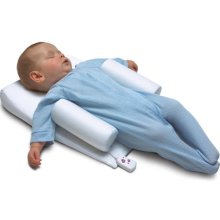
Warning on ALL Sleep Positioners 9/29/2010

Danger: Sleep positioners are NEVER safe to use. Babies may suffocate if they move and their airways become blocked by the sleep positioner.  Remedy: NEVER use a sleep positioner. Best Blogger Tips

Wednesday, January 5, 2011

Crib ban

March of Dimes shared this information:

Federal ban on drop-side cribs
This year we posted numerous recalls on drop-side cribs. The U.S. Product Safety Commission (CPSC) Chairman Inez Tenenbaum, U.S. senators and a parent whose child died from a faulty crib announced on December 15th that the CPSC has approved new federal rules to end dangerous, traditional drop-side cribs. The new federal crib standards, set to take effect in June, would stop the sale, re-sale, manufacture, and distribution of drop-side cribs and would also prohibit drop-side cribs at motels, hotels and childcare facilities. Drop side cribs have resulted in the deaths of at least 32 infants since 2001.

CPSC’s new federal standards will also make mattress supports stronger, crib hardware sturdier and compliance testing more rigorous. This is the first time in nearly 30 years that federal crib standards have been updated.
Best Blogger Tips

Friday, November 26, 2010

Babywearing

Safe babywearing - read here (CPSC) Best Blogger Tips

Wednesday, November 10, 2010

Pasteurization & Pregnancy

What is is and why is it important?In pregnancy, the immune system is weakened. This is normal and it helps prevent miscarriage which might occur due to the body's rejection of "foreign" matter. However, this means you are also at particularly high risk for foodborne illnesses and therefore must be extra careful about foods that might harbor bacteria. In a non-pregnant adult, the illness could be minor and transient. Besides your immune system suppression, the baby has not yet developed adequate immunity to fight these germs.

Pasteurization is a process that makes some foods safer. A little history...
In 1864, a French man named Louis Pasteur discovered that liquids such as milk could be heated to a temperature slightly below boiling and held there for a set amount of time to eliminate the most harmful bacteria. The process of pasteurization is named after Louis Pasteur in recognition of his immense contribution to food safety and disease theory.

Grocery stores carry a wide array of pasteurized goods including milk, juices, non-dairy milks, and other similar food products. Many nations require that foods be pasteurized for safety.
Pasteurization relies on the principle that most harmful bacterial can be killed by heat. The most effective way to kill bacteria is boiling, but this compromises the flavor of the liquid. Pasteurization strikes a happy medium, keeping the flavor delicious while making the food safer. In addition to minimizing the risk of sickness, pasteurization also makes foods more shelf stable and less likely to rot, meaning that fresh dairy products and juices are available to more people. (WiseGeek)
What's the word in pregnancy?

The recommendations for pregnant women are to avoid soft cheeses made with unpasteurized milk. Examples are Brie, feta, Camembert, Roquefort, blue-veined, queso blanco, queso fresco and Panela. Check the label to see what kind of milk was used to make the cheese. All milk and any foods made from it should be pasteurized. So should juices. Cream cheese is not one of these soft cheeses of concern because it is typically pasteurized. That is the key word when looking at cheese. Often you will hear people refer to "soft" cheeses to avoid - again, it's not the "soft" that's the problem; if it's pasteurized you're good to go with it. Always check the label before eating. If you have any doubt -- for example, if it's served at a party and you can't look at the package -- it's best not to eat it. Listeriosis is the concern and while relatively rare, pregnant women are more often and more seriously affected than the general population.

Baby Center says
"Cottage cheese, ricotta, cream cheese, processed cheese (such as American), and hard cheese (such as cheddar and Parmesan), as well as cultured dairy products like yogurt and buttermilk, are generally considered safe -- either because they’re made with pasteurized milk or because they're processed in ways that help inhibit the growth of the bacteria.
Keep in mind that it's important to keep cheese and other dairy products refrigerated to prevent the growth of other kinds of bacteria."
In the fall...

At this time of year, you may find see unpasteurized apple cider (perhaps sold at local booths or in the refrigerated section of the grocery store). The CDC recommends not drinking this when pregnant. Some people are opposed to pasteurization or just like the natural flavors they believe are affected by the process. If you fall in this category, it's best to avoid milk (unpasteurized or raw milk) for the time being. Calcium is important so if you don't use dairy products regularly you should talk to your doctor or midwife about taking a calcium citrate supplement in addition to your prenatal vitamin. If you do, take it at a different time of day because your body can only absorb so much of this supplement at a time (about 500 mg).

'Tis the season for parties so don't forget baby - take care of you both. Don't indulge in high risk behaviors such as drinking alcohol, smoking, overeating or indulging in high risk foods. Best Blogger Tips

Wednesday, October 27, 2010

Domestic Psychological Violence

The most common form of partner violence! Psychological abuse is the willful infliction of mental or emotional anguish by threat, humiliation, or other verbal or nonverbal conduct.
"Psychological violence during pregnancy by an intimate partner is strongly linked to postnatal depression, independent of physical or sexual violence." Study coordinator Dr. Ana Bernarda Ludermir, PhD (Brazil) said, "We need to understand more about why psychological violence occurs and develop interventions to prevent it from occurring, as well as treatments to reduce its impact."
She added that prenatal care could provide an opportunity to identify women at risk. "Currently, we place emphasis, and rightly so, on preventing and treating physical violence, but psychological violence is also a serious problem, as this study shows," she says. "Interventions that might prevent psychological violence or help treat its consequences could reduce the substantial burden of postnatal depression that affects mothers, children, and the healthcare system as a whole."
"...In an accompanying editorial, Rachel Jewkes, MD, from the Medical Research Council, Pretoria, South Africa, writes that emotional abuse probably has a greater importance in women's mental ill-health than originally thought, "and should therefore receive more attention from researchers and health services."
She adds that the high prevalence of postnatal depression reported in the study "shows the great need for improved mental health care."
Finally, Dr. Jewkes points out that emotional abuse screening in pregnant women is not currently recommended by official bodies, such as the American Congress of Obstetricians and Gynecologists, but suggests that it should be.
There is mounting evidence, she writes, "that guidelines should include questions about emotional abuse, as well as physical and sexual abuse. Prevention of all forms of intimate partner violence is very important for improving women's health, particularly their mental health." (Medscape Medical News).
The National Coalition Against Domestic Violence gives the following examples of psychological abuse:
· Denying the victim access to money or economic support.
· Harassing the victim at work or school.
· Threatening to injure, permanently disfigure, or kill the victim and/or loved ones.
· Damaging the victim’s property.
· Preventing the victim from eating, sleeping, or leaving her place of residence.
· Threatening or physically abusing the family pet.
National Domestic Violence Hotline 1-800-799-SAFE
Statewide Domestic Violence Info-line (24 hrs/day) 1-800-897-LINK (5465)

Read more about this important subject here. A good book is Why Does He Do That?: Inside the Minds of Angry and Controlling Men by Lundy Bancroft.
Best Blogger Tips

Monday, October 18, 2010

Safety warning...

WARNING ABOUT BABY MONITORS NEAR CRIBS
The Consumer Product Safety Commission (CPSC) has issued a safety alert to warn parents and caregivers about the dangers of placing baby monitors (both audio and video) too close to sleep environments for babies, including cribs, bassinets and play yards. Since 2004, CPSC has received six reports of infants who were strangled by baby monitor cords placed too close to the crib. Most recently, an infant died of strangulation in March 2010 after being entangled in the camera monitor cord near her crib. CPSC recommends that parents use a wireless baby monitor to avoid the risk of strangulation or, if using a monitor with cords, make sure all are out of arm’s reach of the child. For more tips or to review a copy of the CPSC safety alert at http://cpsc.gov/cpscpub/pubs/5066.pdf.
Best Blogger Tips

Tuesday, September 28, 2010

Similac Problem

For information on the Similac recall and to find out if you have some that might be affected, click here. Or read the full list here. Best Blogger Tips